
Not every messy house is a hoarder cleanout. Some are just… behind. Maybe a busy family let the garage pile up for a summer, or a home has three years of unopened mail on the kitchen table. That’s clutter. It’s annoying, but it’s manageable with a weekend and a few trash bags.
A true hoarder cleanout is different, and most people don’t realize it until they’re standing in the middle of it.
The signs it’s more than clutter
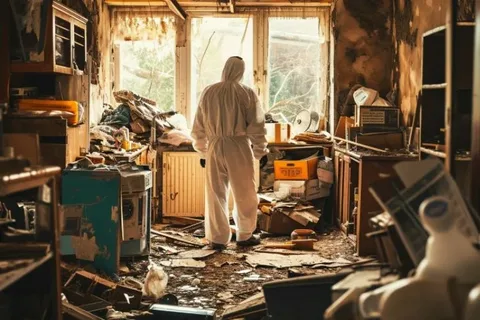
If you can’t walk through a room without turning sideways, if there are pathways instead of floors, if furniture has disappeared under years of accumulation — that’s not a cleaning job anymore. That’s a restoration project. And it usually comes with things nobody wants to deal with alone: pest damage, mold behind stacked boxes, structural weight concerns from years of stored items, or biohazard situations if someone was living in unsafe conditions.
There’s also the emotional side, which honestly matters just as much as the physical work. Hoarding is often tied to loss, trauma, or a family member who’s struggling, and cleanouts frequently happen because a relative stepped in, or because a property needs to be sold or rented again. Nobody walks into that situation feeling good about it.
Why DIY usually backfires here
People try to tackle it themselves for a few reasons — cost, privacy, or just not wanting strangers going through personal belongings. Understandable. But here’s what usually happens: it takes far longer than expected, the person doing it burns out emotionally, and things that need careful handling (documents, family photos, sentimental items) get lost in the chaos of trying to just “get it done.”
A professional crew that’s actually done this kind of work brings a system: sorting valuables from trash, handling hazardous material safely, and moving at a pace that respects the person who lived there — without making the process drag on for months.
What a good cleanout actually looks like
It starts with a walkthrough and an honest conversation, not judgment. Then a plan: what gets kept, donated, or hauled. Then the physical work — which is often the easy part compared to the sorting. And it ends with the space actually usable again, whether that’s for the family to move back in, a landlord to re-list the unit, or an estate to be settled.
If you’re facing this with a parent, a tenant, or your own home, the biggest thing to know is: you don’t have to do it alone, and you shouldn’t have to justify how it got this way to anyone helping you fix it.